Call for papers
Deadline : September 15, 2026
Call for papers
Deadline : September 15, 2026
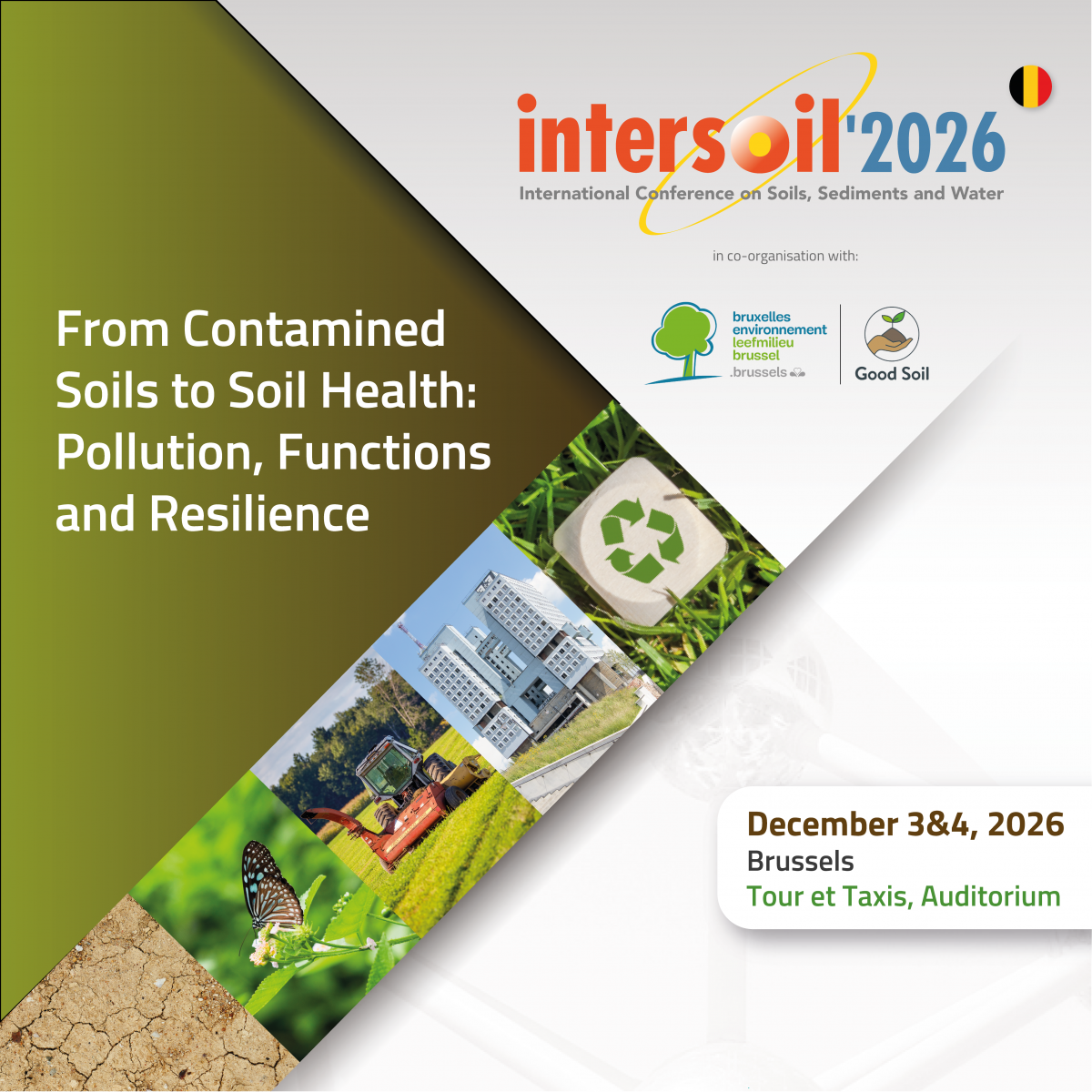
From contaminated soils to soil health: pollution, functions and resilience
At a time when soils are facing
increasing pressure from urbanisation, persistent pollution and the effects of
climate change, the issue of their protection, sustainable management and
restoration has now become a key concern for public health, the environment and
spatial planning.
In Belgium, this awareness is nothing new. Legislation on contaminated land
has been in place for over 30 years in Flanders, over 20 years in Brussels and
over 8 years in Wallonia. Over the decades, the three Regions have developed
their own regulatory frameworks, technical tools and operational practices,
whilst facing common challenges. At the same time, they have implemented
numerous initiatives relating to soil health, well before the recent adoption
of the European directive on soil monitoring and health. These include, in
particular, the Good Soil strategy in Brussels, bodemzorg in Flanders and the
Walloon Soil Quality Index (IQSW) in Wallonia, which demonstrate a clear
commitment to viewing soil as a living, multifunctional and strategic resource.
Work is currently underway in all three regions to transpose the European
directive, involving in-depth consideration of how to harmonise approaches,
strengthen monitoring and incorporate the latest scientific findings. This
process marks an important milestone: the role of soil is finally being
recognised for its true value, not only as a foundation for development, but
also as a key lever in the fight against the effects of global warming, whether
in terms of carbon sequestration, water regulation, biodiversity or the
mitigation of urban heat islands.
It is against this rapidly evolving regulatory, scientific and societal
backdrop that the Intersoil 2026 conference will take place in Brussels
on Thursday 3 and Friday 4 December 2026. This event will bring
together researchers, experts, public authorities, engineering consultancies
and practitioners to discuss current and future challenges relating to soil,
with a view to fostering international and interdisciplinary dialogue.
The first day will be devoted to soil pollution, with an overview of the
situation across the three regions and a review of developments in the
regulatory framework. The afternoon will focus on emerging pollutants,
particularly PFAS and microplastics, the presence of which in soil and
groundwater raises major challenges in terms of sampling, analysis, standards,
human health risk assessment and treatment methods. The day will conclude with
a round table discussion on PFAS, facilitating the exchange of scientific,
technical and institutional perspectives.
The second day will take a more comprehensive approach to soil management,
particularly in urban areas. Discussions will focus on soil condition
monitoring, de-sealing, technosols and the management of excavated soil. A
round-table discussion will open the debate on soil health assessment, a key
issue for guiding public policy and development projects. The afternoon will be
devoted to the prevention of soil degradation, particularly in the context of
construction sites, as well as to restoration methods, including techniques for
treating and decompacting degraded soils.
Through this programme, Intersoil 2026 aims to build on decades of
regulatory experience in Belgium, promote existing regional initiatives and
actively contribute to greater recognition of soil as a key pillar of the
ecological and climate transition.
On 3 and 4 December in Brussels, Intersoil 2026 will offer a
unique opportunity to meet the key players at the heart of these developments.
It is this challenge that the 6th edition of Intersoil, organised in
partnership with Brussels Environment, invites you to take on.
We’d love to hear your feedback!
▬ 5 major themes ▬
① Soil pollution and regulatory frameworks
② Emerging pollutants: identifying, measuring and managing
③ Soil monitoring, diagnosis and health
④ Sustainable soil management in urban areas
⑤ Prevention and restoration of degraded soils